In the realm of geotechnical engineering, ground improvement encompasses a suite of techniques designed to enhance the engineering properties of soil and rock to support structural loads safely and economically. In Dallas, a city experiencing rapid commercial and residential expansion, this category is not merely an option but a fundamental necessity. The region's variable subsurface conditions, ranging from expansive clays to loose alluvial deposits, often lack the inherent strength or stiffness required for modern infrastructure. Without targeted intervention, projects face significant risks including excessive settlement, slope instability, and foundation failure, making the strategic application of methods like stone column design critical for long-term performance and risk mitigation.
The geology of the Dallas-Fort Worth metroplex is dominated by the Eagle Ford Shale and the overlying Austin Chalk, but it is the quaternary alluvium along the Trinity River and its tributaries that frequently dictates the need for improvement. These younger sediments consist of interbedded clays, silts, and sands, often exhibiting high plasticity and a potential for significant volume change with moisture fluctuation. The notorious expansive clay soils, common across North Texas, can exert uplift pressures capable of cracking slabs and pavements. Consequently, ground improvement strategies must be tailored to mitigate both the compressibility of soft, saturated fine-grained soils and the shrink-swell behavior of near-surface fat clays, ensuring a stable and predictable bearing stratum.
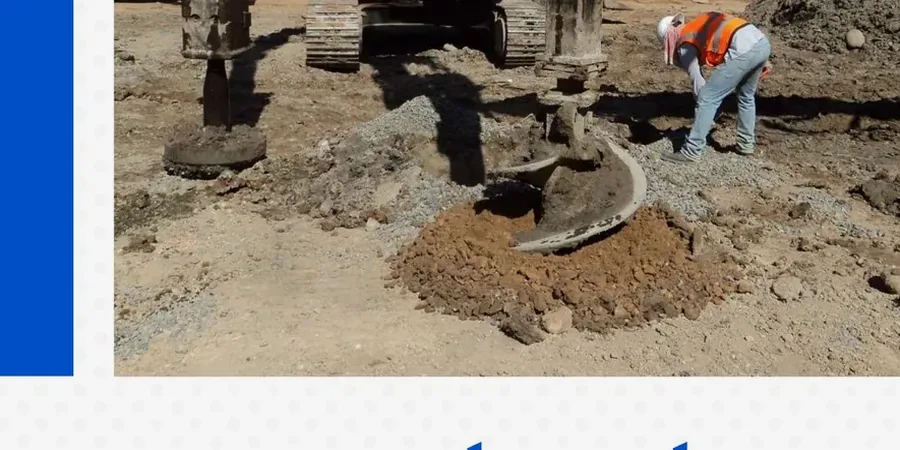
Design and execution of ground improvement in Dallas must adhere to a robust framework of national and local standards. The International Building Code (IBC), as adopted by the City of Dallas, provides the overarching performance criteria for allowable bearing capacity and total and differential settlement. Crucially, the geotechnical investigation, which forms the basis of any improvement design, must comply with ASTM International standards for site characterization, laboratory testing, and in-situ testing methods. For deep improvement techniques, guidelines from the Federal Highway Administration (FHWA), particularly its comprehensive manuals on ground modification, serve as the de facto standard of practice. These documents outline rigorous design methodologies, material specifications, and quality control procedures that engineers must follow to validate that the treated ground meets the project's stringent performance specifications.
The types of projects in Dallas that routinely require ground improvement are diverse and span both the public and private sectors. Large-footprint commercial structures, such as distribution warehouses and data centers, demand uniform support to prevent differential settlement that could impair sensitive operations. Infrastructure works, including highway embankments and bridge approaches over the Trinity floodplain, frequently employ vibrocompaction design to densify loose granular fills and natural sands, mitigating liquefaction potential and increasing bearing capacity. Multi-story residential buildings in areas with deep expansive clay profiles also benefit from rigid inclusion systems that transfer loads to more competent strata, bypassing the problematic near-surface soils entirely. Each application requires a bespoke analysis to select the most appropriate and cost-effective technique.
Available services
Common questions
What are the primary indicators that a site in Dallas requires ground improvement?
Key indicators arise from the geotechnical investigation. Low Standard Penetration Test (SPT) blow counts (N-values less than 10) in sands suggest loose, compressible deposits, while high plasticity indices (PI > 25) and significant swell potential in clays point to expansive soil risk. Encountering soft, saturated silts with undrained shear strengths below 1,000 psf is another critical trigger, signaling the need for treatment to control settlement and ensure bearing capacity.
How do local Dallas building codes influence the selection of a ground improvement method?
The City of Dallas adopts the IBC, which mandates that foundations achieve specified allowable bearing pressures and limit total and differential settlement to serviceable levels. This performance-based code requires the engineer of record to submit a design substantiated by geotechnical data. Methods are selected by demonstrating through analytical and empirical means that the treated ground will meet these criteria under the structure's design loads for the life of the building.
What is the typical depth of ground improvement required for Dallas soils?
The treatment depth is project-specific and dictated by the depth of the problematic stratum and the stress influence zone of the proposed structure. For expansive clays, improvement often extends 10 to 15 feet to manage the active zone of moisture fluctuation. In alluvial floodplains for large warehouses, treatment to depths of 20 to 30 feet is common to penetrate soft, compressible layers and reach a competent bearing material, as confirmed by cone penetration testing (CPT).
What quality control measures are essential during ground improvement execution?
Rigorous quality control is non-negotiable and typically follows FHWA guidelines. For stone columns, this includes monitoring the amperage and depth during installation to verify column continuity and diameter. For vibrocompaction, real-time data on vibrator power consumption and penetration rate is recorded. Post-treatment verification testing, such as CPT or pressuremeter tests, is then performed at designated locations to confirm that the design performance criteria have been uniformly achieved across the site.